A drop shipment is a trade transaction in which you sell goods as a retailer without ever holding them yourself. Your customer orders from you, you order from the wholesaler or manufacturer, and they deliver straight to your customer. There are two purchase contracts and two invoices, but only one route for the goods.
The German term for this is Streckengeschäft, the trade-law word used in Germany for business-to-business dropshipping long before the word dropshipping existed. In practice, dropshipping is simply the online version of a drop shipment. Anyone who wants to get rid of storage costs, tied-up capital and packing work ends up with exactly this model.
- In a drop shipment, the supplier delivers straight to your customer while you remain the contracting party and the one who invoices.
- Two contracts, two invoices, one route for the goods: supplier to you, you to the customer.
- You save on storage, tied-up capital and shipping work, but you give up control over delivery time and packaging.
- Dropshipping is the online-retail version of a drop shipment. Consignment stock is different: the goods remain the supplier's property.
- With software, the model runs automatically: products and stock levels come from the supplier into the shop, orders go back to the supplier.
How does a drop shipment work?
Four steps that repeat with every order. That repetition is exactly what makes the model easy to automate.
Customer orders from you
Your customer buys in your shop or on the marketplace. The purchase contract exists between you and the customer, and you issue the invoice.
You order from the supplier
You pass the order on to your wholesaler with the customer’s delivery address. A second purchase contract, a second invoice: supplier to you.
Supplier ships directly
The goods go from the supplier’s warehouse straight to the customer, usually with a neutral delivery note that shows no wholesale prices.
Tracking number comes back
The supplier reports the shipment and tracking number to you. You pass the number on to the customer and close the order.
Drop shipment, dropshipping or consignment stock?
Three terms that often get mixed up. The difference lies in ownership, invoicing and risk.
Drop shipment
Classic trade
- Who delivers to the customer: Supplier directly
- Who invoices the customer: You
- Who owns the goods before the sale: The supplier
- Stock held by you: No
- Typical for: B2B, wholesale, bulky goods
Dropshipping
Drop shipment online
- Who delivers to the customer: Supplier directly
- Who invoices the customer: You
- Who owns the goods before the sale: The supplier
- Stock held by you: No
- Typical for: Online shops, marketplaces
Consignment stock
Selling in your own name
- Who delivers to the customer: You, from your own stock
- Who invoices the customer: You
- Who owns the goods before the sale: The supplier
- Stock held by you: Yes
- Typical for: Boutiques, galleries, consignment
Invoicing and VAT in a drop shipment
Because two contracts arise, there are also two invoices. Your supplier charges you the purchase price, you charge your customer the sales price. Ideally the customer never sees what you pay the wholesaler. That is why reputable wholesalers ship with a neutral delivery note.
Within Germany, VAT is straightforward: both invoices carry German VAT, and you reclaim input tax from the supplier’s invoice. As soon as the supplier or the customer is based in another EU country, the drop shipment becomes what German tax law calls a chain transaction. Then it depends on who commissions the transport as to which delivery is VAT-exempt. Clarify this once with your tax adviser before you connect your first supplier abroad.
Where is the risk?
You are liable to your customer for delivery, warranty and the right of withdrawal, even though you never saw the goods. If the wholesaler delivers late or delivers the wrong item, that is your problem towards the customer. A supplier who reports stock levels in real time and handles returns cleanly is worth more than the cheapest purchase price.
Advantages and disadvantages of a drop shipment
What you give up
- Control over delivery time and packaging
- Margin is smaller than when you buy for stock
- You have to keep an eye on the supplier's stock levels
- Several suppliers mean several parcels per order
What you gain
- No warehouse, no rent, no tied-up capital
- You can widen your range without buying stock
- Sell bulky and expensive items without your own risk
- The supplier handles packing and shipping
Drop shipment in an online shop: by hand or automated?
With ten orders a week, you can still type the order through to the supplier by hand. At ten orders a day, that tips over: create products, update prices, check stock, pass on the order, write back the tracking number. Every step is a source of error, and every error lands on the customer.
We run Import2Shop for exactly this process. The software pulls products, images, prices and stock from your wholesaler into your shop, works out your sales price using your own rules, and passes orders, including the delivery address, on to the supplier. The tracking number comes back automatically. Which wholesalers are already connected is listed in the wholesaler overview; how order handover works is on the order processing page.
Frequently asked questions about drop shipment
What is a drop shipment, in simple terms?
You sell goods to your customer, order them from the supplier, and the supplier sends them straight to the customer. You issue the invoice, the goods never pass through your hands.
What is the difference between a drop shipment and dropshipping?
None in substance. Drop shipment (Streckengeschäft) is the German trade-law term, dropshipping is the name used in online retail. Both describe direct delivery from the supplier to the end customer with you as the seller.
Who issues the invoice in a drop shipment?
Two invoices: the supplier charges you the purchase price, you charge your customer the sales price. The supplier includes a neutral delivery note with no prices shown.
How does VAT work in a drop shipment?
Within Germany it is normal: both invoices carry VAT, and you deduct input tax. If the supplier or the customer is in another EU country, the chain transaction rules apply, and the transport order decides which delivery is VAT-exempt. Check this with your tax adviser first.
Who is liable if the supplier delivers the wrong item or delivers late?
You are. Your customer has a contract with you, not with the wholesaler. Warranty, the right of withdrawal and delivery time remain your responsibility, and you seek recourse from the supplier.
Can a drop shipment be automated?
Yes. Import2Shop imports products and stock from the wholesaler into the shop, calculates prices and passes orders, with the delivery address, on to the supplier. Tracking numbers come back automatically.
Related articles

Consignment Stock: Meaning, Settlement and Difference from Dropshipping
What consignment stock is, who owns it, how settlement and commission work, where the risk lies, and how it differs from drop shipment and dropshipping.

Wholesaler integration: build it yourself or use software?
Connecting a wholesaler to your online shop: a custom build is quick to estimate and slow to pay off. What an integration really involves, what it costs compared with an AI subscription and your own time, where customer data ends up and when ready-made software is the better choice.
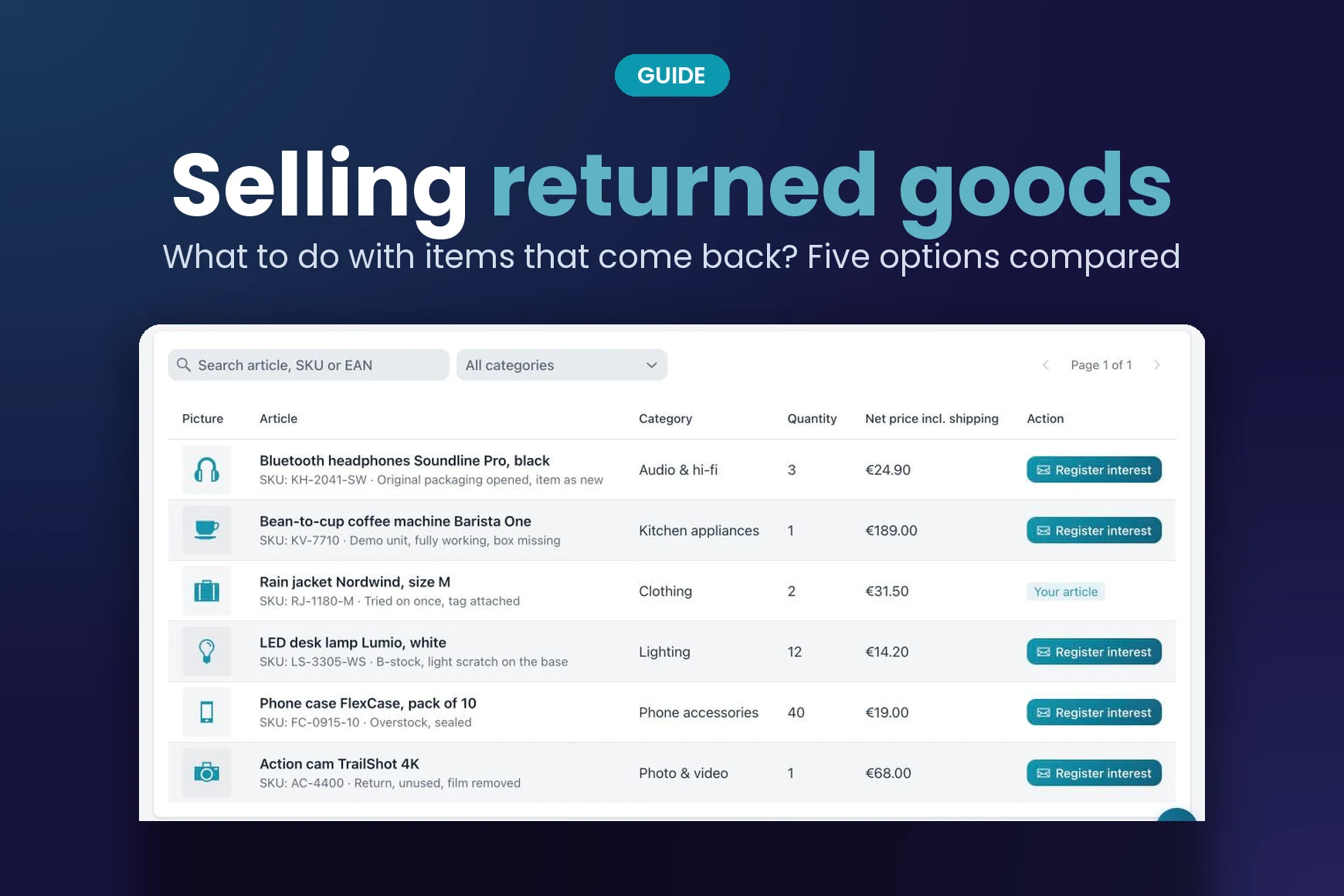
Selling Returned Goods: What to Do with Items That Come Back
Selling returned goods instead of storing them: five options for items that come back, what matters about the condition and how merchants pass returns on to each other.
Connect wholesalers, get products and stock automatically in the shop, orders automatically go to the supplier. Cancel monthly, setup included.